

As a supplier of Hydraulic Choke Control Cabinets, I've often been asked about the control accuracy of these essential pieces of equipment. In the oil and gas industry, where precision and reliability are paramount, understanding the control accuracy of a Hydraulic Choke Control Cabinet is crucial for ensuring optimal performance and safety.
Understanding the Basics of a Hydraulic Choke Control Cabinet
Before delving into the control accuracy, it's important to understand what a Hydraulic Choke Control Cabinet is and what it does. A Hydraulic Choke Control Cabinet is a key component in a well - control system, used to regulate the flow of fluids (such as oil, gas, or water) from a well. It works by adjusting the opening of a choke valve, which in turn controls the pressure and flow rate of the fluid.
The cabinet typically consists of a hydraulic power unit, control valves, sensors, and a control panel. The hydraulic power unit provides the necessary force to operate the choke valve, while the control valves and sensors work together to precisely adjust the valve position based on the desired flow and pressure parameters.
Factors Affecting Control Accuracy
Several factors can influence the control accuracy of a Hydraulic Choke Control Cabinet.
1. Sensor Precision
Sensors play a vital role in the control system. Pressure sensors, flow sensors, and position sensors are used to measure the relevant parameters and provide feedback to the control panel. The accuracy of these sensors directly impacts the control accuracy of the cabinet. High - precision sensors can detect even the slightest changes in pressure, flow, or valve position, allowing for more accurate control. For example, a pressure sensor with an accuracy of ±0.1% can provide much more precise data compared to one with an accuracy of ±1%.
2. Hydraulic System Design
The design of the hydraulic system is another critical factor. A well - designed hydraulic system ensures smooth and stable operation of the choke valve. Factors such as the size and type of hydraulic pumps, the quality of hydraulic hoses and fittings, and the layout of the hydraulic circuit can all affect the control accuracy. A properly sized hydraulic pump can provide the right amount of pressure and flow to the choke valve, while high - quality hoses and fittings minimize pressure losses and leaks.
3. Control Algorithm
The control algorithm implemented in the control panel is what determines how the cabinet responds to the sensor data. A sophisticated control algorithm can take into account various factors such as the dynamic characteristics of the fluid, the non - linear behavior of the choke valve, and the interaction between different control parameters. For instance, a PID (Proportional - Integral - Derivative) control algorithm is commonly used in Hydraulic Choke Control Cabinets. It continuously calculates the error between the desired and actual values of the control parameters and adjusts the valve position accordingly to minimize the error.
4. Valve Characteristics
The characteristics of the choke valve itself also affect the control accuracy. Different types of choke valves, such as fixed - choke valves and adjustable - choke valves, have different flow - control capabilities. The internal design of the valve, including the shape of the flow passage and the sealing mechanism, can influence how accurately the valve can be positioned and how well it can control the flow. A valve with a smooth and linear flow - control curve is generally easier to control accurately.
Measuring Control Accuracy
To measure the control accuracy of a Hydraulic Choke Control Cabinet, several parameters are typically considered.
1. Flow Control Accuracy
Flow control accuracy is usually expressed as a percentage of the setpoint. For example, if the setpoint for the flow rate is 100 barrels per minute (BPM) and the actual flow rate varies between 98 and 102 BPM, the flow control accuracy is ±2%. In high - precision applications, a flow control accuracy of ±0.5% or even better may be required.
2. Pressure Control Accuracy
Similar to flow control accuracy, pressure control accuracy is also expressed as a percentage of the setpoint. In a well - control system, maintaining the correct pressure is crucial for preventing blowouts and ensuring the safety of the operation. A pressure control accuracy of ±0.5% to ±1% is commonly required in the oil and gas industry.
3. Valve Positioning Accuracy
Valve positioning accuracy refers to how closely the actual position of the choke valve matches the desired position. It is typically measured in degrees or millimeters, depending on the type of valve. A high - accuracy Hydraulic Choke Control Cabinet can achieve a valve positioning accuracy of ±0.1° or better.
Importance of High Control Accuracy
High control accuracy in a Hydraulic Choke Control Cabinet offers several benefits.
1. Safety
In the oil and gas industry, safety is of utmost importance. A Hydraulic Choke Control Cabinet with high control accuracy can precisely regulate the pressure and flow rate of the fluid, reducing the risk of over - pressure situations that could lead to well blowouts or other safety hazards. By maintaining the correct pressure and flow, the cabinet helps to ensure the integrity of the well - control system.
2. Operational Efficiency
Accurate control of the choke valve allows for more efficient operation of the well. It can optimize the production rate by ensuring that the fluid is flowing at the desired rate and pressure. This can lead to increased oil and gas production and reduced operational costs.
3. Equipment Protection
Precise control also helps to protect the equipment in the well - control system. By preventing excessive pressure or flow, the cabinet can extend the lifespan of the choke valve, pumps, and other components, reducing the need for frequent maintenance and replacement.

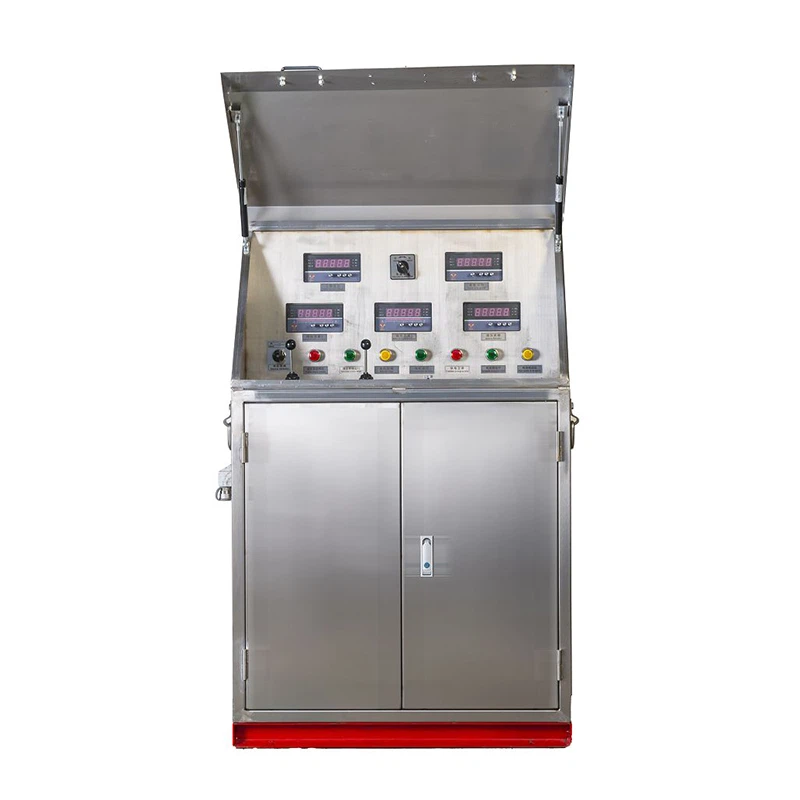
Our Hydraulic Choke Control Cabinets
As a supplier, we are committed to providing Hydraulic Choke Control Cabinets with high control accuracy. Our cabinets are equipped with high - precision sensors that can detect even the smallest changes in pressure, flow, and valve position. The hydraulic systems in our cabinets are carefully designed and engineered to ensure smooth and stable operation, with minimal pressure losses and leaks.
We also use advanced control algorithms in our control panels. These algorithms are continuously optimized to adapt to different operating conditions and provide the most accurate control possible. In addition, we offer a wide range of choke valves with excellent flow - control characteristics, allowing our customers to choose the valve that best suits their specific needs.
If you are interested in learning more about our Hydraulic Choke Manifold Control Panel, Electric Choke Manifold Control Panel, or API 16C Choke Manifold Control Panel, please feel free to contact us. We are always ready to discuss your requirements and provide you with the best solutions for your well - control needs. Our team of experts can help you select the right equipment and ensure that it is installed and commissioned correctly.
Conclusion
The control accuracy of a Hydraulic Choke Control Cabinet is a critical factor in the oil and gas industry. It is influenced by various factors such as sensor precision, hydraulic system design, control algorithm, and valve characteristics. High control accuracy offers significant benefits in terms of safety, operational efficiency, and equipment protection. As a supplier, we strive to provide Hydraulic Choke Control Cabinets that meet the highest standards of control accuracy. If you are in the market for a reliable and accurate Hydraulic Choke Control Cabinet, we encourage you to reach out to us for a detailed discussion and potential procurement.
References
- API RP 16C: Specification for Choke Manifolds and Associated Equipment
- Hydraulic Control System Design Handbook
- Oil and Gas Well - Control Technology Literature