

Hey there! As a supplier of Hydraulic Choke Control boxes, I've seen firsthand how important it is to protect these crucial pieces of equipment from corrosion. Corrosion can not only damage the box itself but also lead to malfunctions and safety hazards. So, in this blog post, I'm gonna share some of the top corrosion - protection measures for a Hydraulic Choke Control box.
1. Material Selection
The first step in corrosion protection starts right at the design and manufacturing stage, with the choice of materials. Using corrosion - resistant materials can significantly reduce the risk of corrosion. Stainless steel is a great option for the outer casing of the Hydraulic Choke Control box. It's known for its high resistance to rust and corrosion, especially in harsh environments. For instance, if the control box is going to be used in an offshore oil rig where it's exposed to saltwater and high humidity, stainless steel can withstand these conditions much better than regular steel.
Another material consideration is the use of non - metallic components. Plastics and composites can be used for some parts of the control box. They are lightweight, and many of them have excellent resistance to corrosion. However, we also need to make sure they have the right mechanical properties to handle the stresses in the hydraulic system.
2. Surface Coating
Applying a good surface coating is one of the most common and effective ways to protect the Hydraulic Choke Control box from corrosion. There are several types of coatings available, each with its own advantages.
- Paint Coatings: A high - quality paint can act as a barrier between the metal surface of the control box and the corrosive environment. Epoxy - based paints are often used because they provide good adhesion and protection. They can be formulated to resist chemicals, UV radiation, and abrasion. Before applying the paint, the surface must be properly prepared. This usually involves cleaning, sandblasting, or degreasing to ensure the paint adheres well.
- Powder Coatings: Powder coating is another popular option. It involves applying a dry powder to the surface of the control box and then heating it to form a hard, durable finish. Powder coatings are more environmentally friendly than some paint coatings as they don't contain solvents. They also offer excellent corrosion resistance and a smooth finish.
3. Sealing and Gasketing
Proper sealing is crucial to prevent moisture, dust, and corrosive agents from entering the Hydraulic Choke Control box. Gaskets are used to seal the joints and openings of the box. They need to be made of materials that are resistant to the chemicals and environmental conditions the control box will face.
For example, in a hydraulic system, the gaskets should be able to withstand the hydraulic fluids used. Silicone gaskets are a good choice as they are flexible, have good temperature resistance, and can form a tight seal. Regular inspection and replacement of gaskets are necessary because over time, they can degrade and lose their sealing properties.
4. Environmental Control
Controlling the environment around the Hydraulic Choke Control box can also help prevent corrosion. If possible, the control box should be installed in a sheltered area. This could be an indoor enclosure or a weather - proof shed.
In addition, maintaining proper humidity levels is important. High humidity can accelerate corrosion, especially in the presence of oxygen and certain chemicals. Dehumidifiers can be used in enclosed spaces where the control box is located to keep the humidity within an acceptable range.
5. Cathodic Protection
Cathodic protection is a technique used to prevent corrosion of metal surfaces by making them the cathode of an electrochemical cell. There are two main types of cathodic protection: sacrificial anode protection and impressed current protection.
- Sacrificial Anode Protection: In this method, a more reactive metal (the sacrificial anode) is connected to the metal surface of the control box. The sacrificial anode corrodes instead of the control box, protecting it from damage. Zinc and aluminum are commonly used as sacrificial anodes.
- Impressed Current Protection: This involves using an external power source to supply a direct current to the control box, making it the cathode. An inert anode is used to complete the electrical circuit. Impressed current protection is more suitable for large - scale applications or in environments with high corrosion rates.
6. Maintenance and Inspection
Regular maintenance and inspection are essential for long - term corrosion protection of the Hydraulic Choke Control box. A maintenance schedule should be established to check for signs of corrosion, such as rust spots, flaking paint, or damaged gaskets.

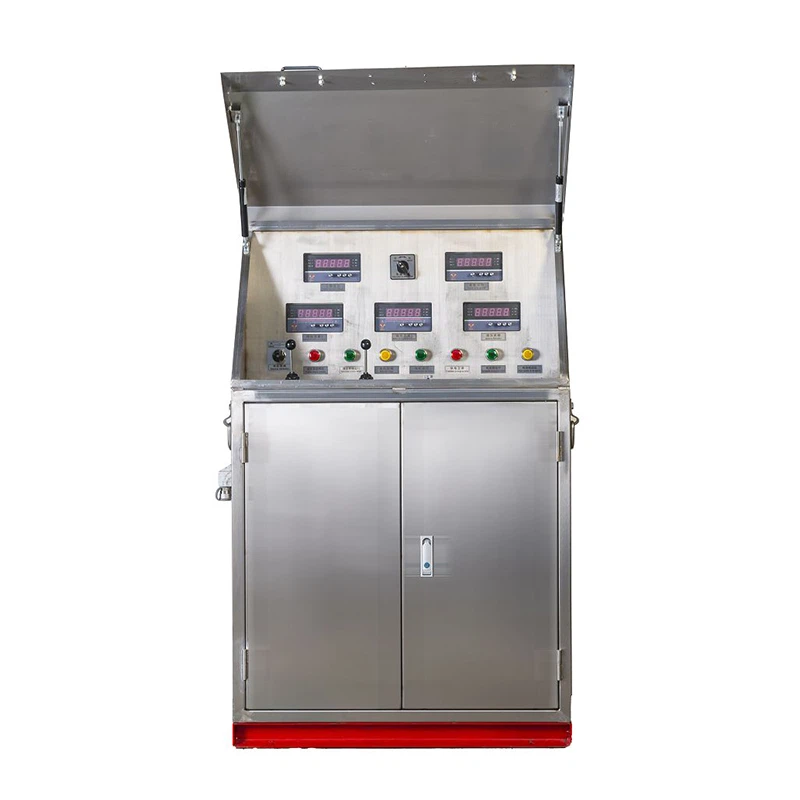
During inspections, any damaged parts should be repaired or replaced immediately. This could involve repainting areas where the coating has been damaged, replacing worn gaskets, or checking the effectiveness of the cathodic protection system if installed.
As a supplier, I know that choosing the right corrosion - protection measures for your Hydraulic Choke Control box is crucial for its performance and longevity. If you're interested in learning more about our products, like our Electric Choke Manifold Control Panel, Hydraulic Choke Manifold Control Panel, or API 16C Choke Manifold Control Panel, feel free to reach out for a detailed discussion on how we can meet your specific needs. We're always here to help you find the best solutions for your hydraulic systems.
References
- Jones, D. A. (1996). Principles and Prevention of Corrosion. Prentice - Hall.
- Fontana, M. G. (1986). Corrosion Engineering. McGraw - Hill.