

Hey there! As a supplier of Hydraulic Choke Control Consoles, I'm super stoked to share with you the ins and outs of what makes these bad boys tick. In this blog, we're gonna break down the main components of a Hydraulic Choke Control Console, so you'll have a solid understanding of how they work and why they're so crucial in the oil and gas industry.
1. Hydraulic Power Unit (HPU)
The Hydraulic Power Unit is like the heart of the Hydraulic Choke Control Console. It's responsible for generating the hydraulic power needed to operate the chokes. The HPU typically consists of an electric motor or a diesel engine, a hydraulic pump, a reservoir for hydraulic fluid, and a set of valves and filters.
The electric motor or diesel engine drives the hydraulic pump, which sucks in hydraulic fluid from the reservoir and pressurizes it. The pressurized fluid is then sent through a series of valves and hoses to the chokes, where it's used to open and close them. The reservoir holds the hydraulic fluid and helps to cool it down, while the filters remove any contaminants from the fluid to keep the system running smoothly.
2. Choke Actuators
Choke actuators are the muscle behind the chokes. They're responsible for physically opening and closing the chokes in response to signals from the control console. There are two main types of choke actuators: hydraulic and electric.
Hydraulic choke actuators use hydraulic pressure to move a piston or a cylinder, which in turn opens or closes the choke. They're known for their high force and reliability, making them a popular choice in the oil and gas industry. Electric choke actuators, on the other hand, use an electric motor to drive a gearbox or a screw mechanism, which opens or closes the choke. They're typically more precise and easier to control than hydraulic actuators, but they may not be as powerful.

3. Control Valves
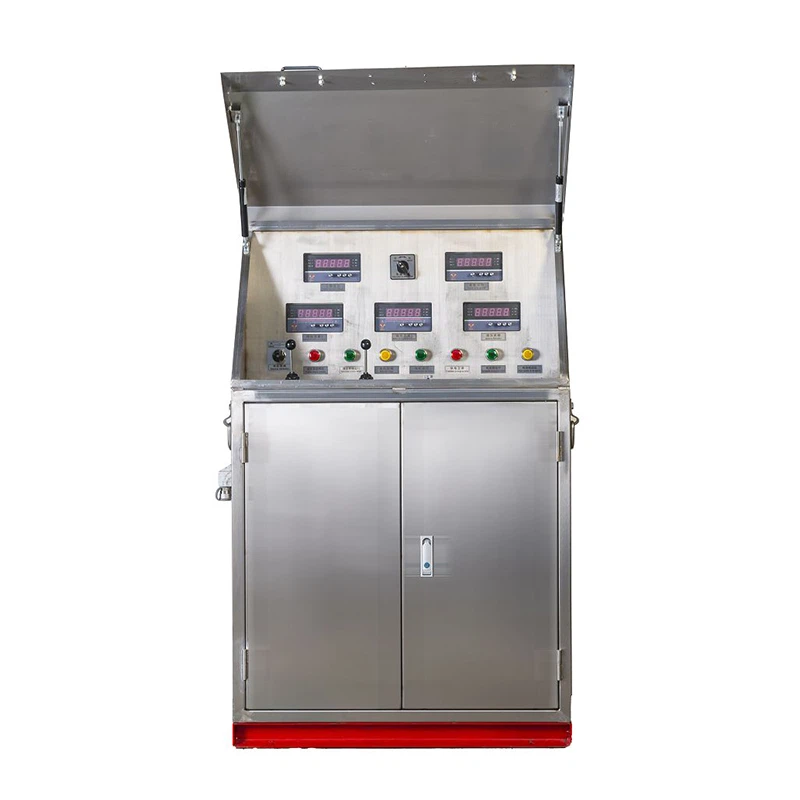
Control valves are used to regulate the flow of hydraulic fluid to the choke actuators. They're typically located on the control console and are operated by a series of switches or buttons. The control valves allow the operator to adjust the opening and closing speed of the chokes, as well as the pressure and flow rate of the hydraulic fluid.
There are several types of control valves, including solenoid valves, proportional valves, and servo valves. Solenoid valves are the simplest type of control valve and are typically used for on/off control. Proportional valves allow the operator to control the flow of hydraulic fluid in proportion to the input signal, while servo valves are the most precise type of control valve and are used for high-performance applications.
4. Pressure Gauges and Transducers
Pressure gauges and transducers are used to monitor the pressure of the hydraulic fluid in the system. They're typically located on the control console and provide the operator with real-time information about the pressure and flow rate of the hydraulic fluid.
Pressure gauges are mechanical devices that use a Bourdon tube or a diaphragm to measure the pressure of the hydraulic fluid. They're simple and reliable, but they may not be as accurate as pressure transducers. Pressure transducers, on the other hand, are electronic devices that convert the pressure of the hydraulic fluid into an electrical signal. They're more accurate and can be connected to a computer or a data logger for remote monitoring and control.
5. Control Panel
The control panel is the brain of the Hydraulic Choke Control Console. It's where the operator sits and controls the chokes. The control panel typically consists of a series of switches, buttons, gauges, and indicators, as well as a display screen for monitoring the system.
The control panel allows the operator to open and close the chokes, adjust the opening and closing speed, and monitor the pressure and flow rate of the hydraulic fluid. It also provides the operator with diagnostic information about the system, such as fault codes and warnings. Some control panels are also equipped with a touch screen interface, which makes it easier for the operator to control the system.
6. Hoses and Fittings
Hoses and fittings are used to connect the various components of the Hydraulic Choke Control Console together. They're typically made of high-pressure rubber or steel and are designed to withstand the high pressures and temperatures of the hydraulic system.
The hoses and fittings must be properly installed and maintained to prevent leaks and ensure the safety of the system. They should be inspected regularly for signs of wear and tear, and any damaged hoses or fittings should be replaced immediately.
7. Mounting Frame
The mounting frame is used to support the various components of the Hydraulic Choke Control Console. It's typically made of steel or aluminum and is designed to be sturdy and durable.
The mounting frame must be properly designed and installed to ensure the stability and safety of the system. It should be able to withstand the vibrations and shocks of the hydraulic system, as well as the weight of the components.
Why These Components Matter
Each of these components plays a crucial role in the operation of the Hydraulic Choke Control Console. The HPU provides the power, the choke actuators do the work, the control valves regulate the flow, the pressure gauges and transducers monitor the system, the control panel allows for operator control, the hoses and fittings connect everything, and the mounting frame provides support.
Without any one of these components, the system wouldn't work properly. For example, if the HPU fails to generate enough hydraulic power, the choke actuators won't be able to open or close the chokes. Or if the control valves malfunction, the operator won't be able to control the flow of hydraulic fluid to the choke actuators.
Our Offerings
As a supplier of Hydraulic Choke Control Consoles, we offer a wide range of products that are designed to meet the needs of our customers. Our consoles are built with high-quality components and are rigorously tested to ensure their reliability and performance.
We also offer Electric Choke Manifold Control Panel, API 16C Choke Manifold Control Panel, and Hydraulic Choke Manifold Control Panel. These panels are designed to provide precise control and monitoring of choke manifolds in oil and gas applications.
Contact Us for Procurement
If you're in the market for a Hydraulic Choke Control Console or any of our other products, we'd love to hear from you. Whether you're looking for a standard console or a custom solution, our team of experts can help you find the right product for your needs.
Don't hesitate to reach out to us for more information or to start a procurement discussion. We're here to support you every step of the way.
References
- "Hydraulic Systems Handbook" by E. O. Doebelin
- "Oil and Gas Production Handbook" by Norman Hyne